2023
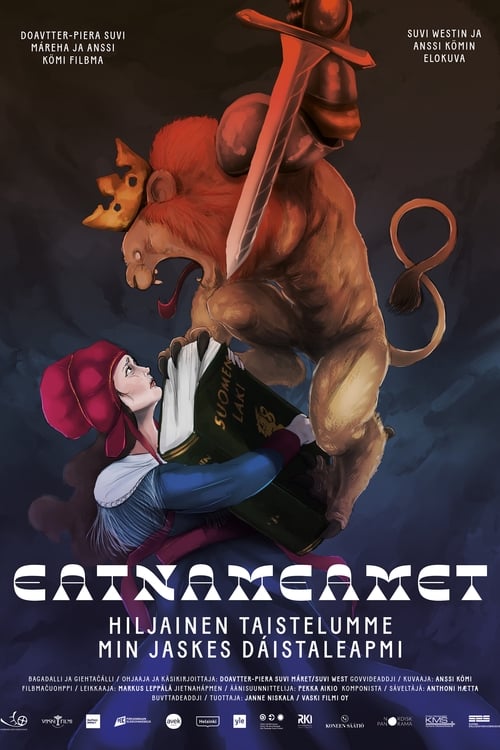
Sámi artefacts from the Finnish National Museum are returning home to Sápmi, while the holy drums of the Sámi people are still imprisoned in the basements of museums across Europe. The returning objects symbolise the dignity, identity, history, connection to ancestors and a whole world view that was taken from the Sámi people. Director Suvi West takes the viewer behind the scenes of the museum world to reflect on the spirit of the objects, the inequality of cultures and the colonialist burden of museums.
2025
A documentary about Sami comic artist Mats Jonsson and his relative Stor-Stina. Her remains were long believed to have been lost in a fire but were recently found and returned to her home town of Malå to be buried.
2020
A Sámi woman fights for her right to claim a tax deduction against the purchase of a dog. Why the Swedish authorities fail to recognize the dog's use as a reindeer herding tool versus a pet opens up a larger discussion about Indigenous rights and economic discrimination in this humorous takedown of the Swedish government's ignorance of Sámi culture.
2021
The AssimiNation is a political pamphlet portraying the indigenous Sámi people fighting for their existence. The film follows the on going cultural genocide of the Sámi which the current Governmental politics allow. This film is a cry for help for the last indigenous people living in the EU.
2005
About being young and Sámi, focusing on the topics, pride, love and conflict. Isabel moves from her mother in Stockholm to her father in Jokkmokk. Amoc rap in Aanaarsämikielâ, Inari Sámi, a language used among 400 people. Alette doesn't feel like a Sámi. Thomas is a drummer, snowboards and dream of being an actor. The skier Tonje always fall in love with a Sámi. Why? Jon is adopted from Colombia and joiks a lot. Thomas and Petra plan for their future. Ritva loves horseback riding. Amanda likes theatre and politics. Vocalist Sandra wonders how much Sámi she is. Johan is brought up in a religious home where music is prohibited. Aslak love scooters. Marit was bullied in school because she is a Sámi.
2008
The Sámi people (also spelled Sami or Saami) are an indigenous Finno-Ugric people inhabiting Sápmi, which today encompasses large northern parts of Norway and Sweden, northern parts of Finland, and the Kola Peninsula within the Murmansk Oblast of Russia. A single daily newspaper is published in Northern Sámi, Ávvir. There are short daily news bulletins in Northern Sámi on national TV in Norway, Sweden and Finland. There is a Sámi theatre, Beaivvas, in Kautokeino on the Norwegian side, as well as in Kiruna on the Swedish side. The largest Sami Publishing house is Davvi Girji. In this program "Topic: Sámi" filmmaker Nils Gaup presents his latest production, "The Kautokeino Rebellion" (2008), author Ann-Helen Laestadius talks about to seek ones roots, and Isabel Pavval share how it is being a young Sámi and youth culture.
2007
The fate of a culture lies on the shoulders of few determined individuals.
1988
Documentary about Lars Theodor Jonsson who was a cross country skier in the 1920s and 30s and now lives alone in the forest.
2011
Personal accounts from the Alta actions in the years 1979 to 1981. Large police forces were deployed against the demonstrators. The dispute over the Alta river began as an environmental issue, but became a major turning point for the Sámi people's struggle for equal rights in Norway.
2022
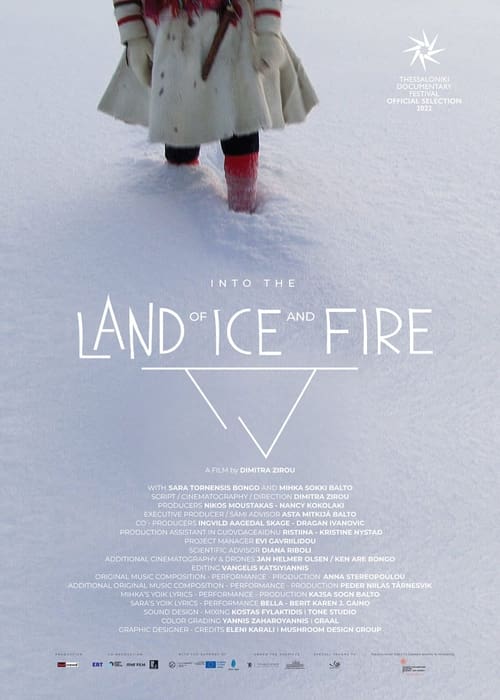
Two parallel stories are gradually unfolding the everyday life of two very different persons - that of 86-year-old Sara and 7-year-old Mihka - both residing in Guovdageaidnu - Kautokeino, in the middle of the Norwegian arctic tundra, through the drastic change of the arctic seasons and the passage from the long winter’s darkness to the never-ending light of the summer season.
An essay film about how it may feel to grow up as a young Sami in Sweden, with poetry written by Ella-Maria Nutti and graphics by Irma Bergdahl. The partying of a typical teenager together with the labels put on you that wont go away, the questions which are thrown on you as knives in the back. A tribute to our ancestors who fought for our rights and a declaration of love to the young Samis who continues to fight
1985
In the film about "the land of eternal light and eternal darkness" we meet some women who talk about their lives. The women have all grown up in reindeer herding families and as children they lived in kotas, moved with reindeer and lived a life in nature. Their own children, on the other hand, have grown up in "normal" Swedish society. None of them have lived like their parents. The film addresses Sami culture, language, school. How modern technology has affected the lives of the Sami.